How to Learn Photography With the Camera You Already Have
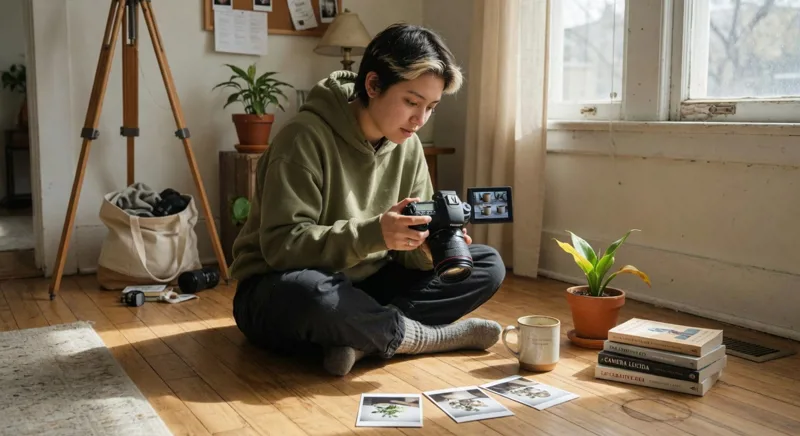
You do not need a new camera to become a better photographer. Learning photography with the camera you already have helps you master light, composition, focus, and storytelling before spending money on expensive gear.
Start by Learning What Your Camera Can Do
Whether you use a smartphone, compact camera, mirrorless camera, or DSLR, begin with the owner’s manual and your camera’s menu. Learn how to change the shooting mode, focus point, ISO, white balance, exposure compensation, and image format.
Do not worry about memorizing every feature. Focus first on the controls that affect the photograph directly:
- How to select autofocus or manual focus
- How to adjust brightness with exposure compensation
- How to activate the grid display
- How to review highlights, shadows, and focus
- How to change between portrait and landscape orientation
- How to use burst mode and self-timer
A camera’s age, megapixel count, and brand matter less than your ability to recognize good light and make intentional choices.
Understand the Exposure Triangle
The exposure triangle consists of aperture, shutter speed, and ISO. Together, these settings determine how bright an image appears while also influencing background blur, motion, and image noise.[1][2]
Aperture
Aperture controls the opening in the lens. A wide aperture, represented by a smaller f-number such as f/1.8, lets in more light and can create a shallow depth of field. This is useful for portraits, flowers, and close-up photography.
A narrower aperture, such as f/8 or f/11, keeps more of a scene sharp. Try it for landscapes, architecture, and group photos.
Shutter Speed
Shutter speed controls how long the camera records light. Fast shutter speeds help freeze action, while slow shutter speeds can create motion blur.[1][2]
Photograph a moving car, running child, or splashing water at several shutter speeds. Then compare the results. This simple exercise quickly shows how camera settings change the feeling of an image.
ISO
ISO affects the camera sensor’s sensitivity to light. A low ISO generally produces cleaner images, while a high ISO helps you photograph in darker conditions but may add visible grain or digital noise.[3]
Use the lowest practical ISO in bright conditions. When the light fades, increase ISO rather than accepting a severely blurred photograph.
Use Automatic Modes as Learning Tools
Automatic mode is not a failure. It can help you concentrate on composition, timing, and subject choice while the camera handles technical decisions.
When you are ready, try these modes:
- Aperture Priority: Choose the aperture while the camera selects a suitable shutter speed.
- Shutter Priority: Choose the shutter speed to freeze or blur motion.
- Program mode: Let the camera choose a basic exposure while you adjust options such as ISO and exposure compensation.
- Manual mode: Control aperture, shutter speed, and ISO yourself.
Many beginner photographers benefit from starting with Aperture Priority or Shutter Priority before moving to full manual control.[4]
Practice Composition Before Buying New Gear
Composition is the arrangement of visual elements inside the frame. Strong composition can make an ordinary subject interesting, even when photographed with a basic camera.
Begin with these techniques:
- Rule of thirds: Place the subject near one of the grid intersections rather than always in the center.
- Leading lines: Use roads, fences, shadows, or architecture to guide the viewer toward the subject.
- Negative space: Leave uncluttered space around the subject to create emphasis.
- Natural framing: Photograph through doorways, windows, branches, or arches.
- Symmetry: Look for balanced shapes and reflections.
- Layering: Include foreground, middle ground, and background to create depth.
Before pressing the shutter, scan the edges of the frame. Distracting objects, bright highlights, and accidental clutter can weaken an otherwise good photograph.
Learn to See and Use Light
Light often matters more than camera equipment. Soft morning light and late-afternoon light can create gentle shadows, while midday sun tends to produce stronger contrast.[4]
Practice photographing the same subject at different times of day. Notice how direction, color, and intensity change the mood.
Try these simple lighting exercises:
- Place a subject beside a window and photograph it facing the light.
- Turn the subject sideways to create more shape and texture.
- Move into open shade to reduce harsh shadows.
- Photograph a backlit subject and adjust exposure compensation.
- Look for reflected light from walls, pavement, or bright surfaces.
Create a Simple Photography Practice Plan
Consistent practice is more valuable than occasional gear upgrades. Give yourself one small assignment each week:
- Week one: Photograph one subject using different compositions.
- Week two: Change only the aperture and compare depth of field.
- Week three: Photograph motion using fast and slow shutter speeds.
- Week four: Capture the same scene in different lighting conditions.
Review your images afterward and choose your best three. Ask what works: Is the subject clear? Is the light flattering? Is the background distracting? Does the image communicate an idea or feeling?
Improve Photos Without Overediting
Basic photo editing can correct exposure, color, cropping, and distractions. Start with adjustments such as brightness, contrast, highlights, shadows, white balance, and cropping.
Avoid using heavy filters to hide weak composition or poor exposure. Editing should support the photograph, not replace careful camera technique. Keep an original copy so you can compare the edited and unedited versions.
When Should You Upgrade Your Camera?
Upgrade only when your current camera creates a specific limitation. You may eventually need better low-light performance, faster autofocus, a longer telephoto lens, improved ergonomics, or stronger video features.
Until then, learn with what you own. A camera upgrade cannot automatically improve composition, timing, light awareness, or visual storytelling.
Conclusion
The best way to learn photography with the camera you already have is to practice deliberately. Understand exposure, study light, simplify your compositions, review your photographs, and repeat the process. Once your skills outgrow your equipment, you will know exactly which feature matters—and why.