The Safe Everyday Observations That Teach Scientific Thinking
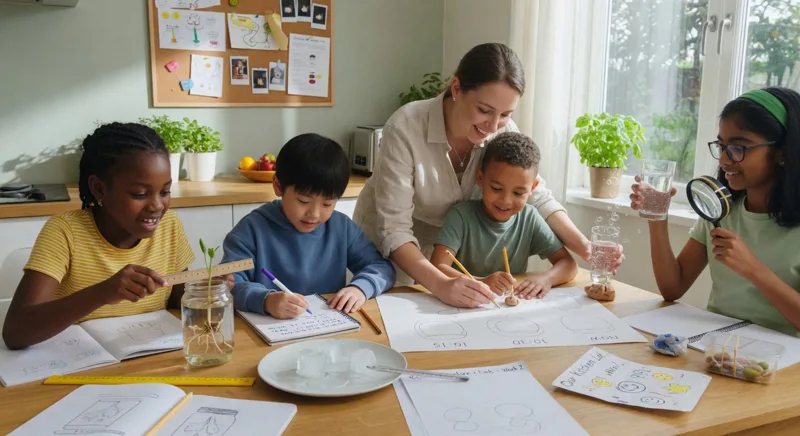
The safe everyday observations that teach scientific thinking are often hiding in plain sight: melting ice, drying laundry, changing shadows, sprouting seeds, and even bubbles in a glass of soda. When you slow down and ask better questions, ordinary moments become practical science lessons.
Why Everyday Observation Builds Scientific Thinking
Scientific thinking does not begin with complicated laboratory equipment. It begins with noticing something, describing it accurately, asking a question, and looking for evidence. Science education frameworks emphasize observing phenomena, identifying patterns, planning investigations, and explaining conclusions using evidence.[1]
This approach is useful for children, families, students, and adults because it turns passive curiosity into active learning. Instead of simply saying, “The plant grew,” you might ask: How much did it grow? Did sunlight make a difference? Was the soil equally moist each day?
A helpful observation separates what you directly notice from what you think it means:
- Observation: The sidewalk is wet.
- Inference: It may have rained or been watered.
- Question: Which explanation fits the available evidence?
This simple distinction is a foundation of evidence-based reasoning.
Safe Everyday Observations to Try
1. Track Changing Shadows
Place a small object, such as a pencil or cup, in a safe outdoor location. At regular intervals, observe and record the direction and length of its shadow. Do not stare directly at the Sun.
You may notice that the shadow changes as the Sun’s apparent position changes. This activity introduces patterns, measurement, time intervals, and the relationship between light direction and shadow length.
For a stronger investigation, make a prediction before collecting data. Will the shadow be longest in the morning, around midday, or later in the afternoon? A simple table or line graph can reveal the pattern clearly.
2. Compare Melting Ice
Place equal-sized ice cubes on separate plates. Put one in a shaded area, one near—but not touching—a warm location, and one in another safe indoor spot. Observe them at regular intervals.
Record the time, appearance, and approximate size of each cube. This demonstrates how conditions can affect the rate of change. It also introduces controlled comparisons: if the cubes are different sizes, the results may be difficult to interpret.
Never use boiling water or handle hot surfaces for this activity. The goal is careful observation, not risk.
3. Observe Water Evaporation
Pour equal amounts of water into two shallow containers. Leave one in a warmer or sunnier location and the other in a cooler or shaded location. Mark the starting water level and compare the levels over several days.
This safe observation can lead to questions about temperature, airflow, surface area, and evaporation. If one container loses more water, avoid jumping to a conclusion. Was it warmer? Did air move across it? Was the container wider?
Good scientific thinking considers several possible explanations rather than accepting the first appealing answer.
4. Watch Seeds Germinate
Place a few bean seeds between damp paper towels inside a transparent container. Keep the material moist, but not waterlogged, and observe the seeds daily.
Record when the seed coat changes, when roots appear, and how the stem develops. You can measure growth with a ruler and sketch each stage. This activity teaches biological change, sequencing, data recording, and the importance of repeated observations.
Do not eat seeds used for experiments, and discard them if mold develops.
5. Explore Sound and Vibration
Stretch a rubber band around an empty container and gently pluck it. Change one factor at a time, such as the length of the vibrating section or the tension, then compare the sound.
This demonstrates that sound is connected to vibration. It also teaches a key investigation skill: changing one variable while keeping other conditions as similar as possible.
6. Notice Patterns in Everyday Materials
Look at condensation on a cold drink, bubbles forming in sparkling water, or water droplets collecting on a bathroom mirror. Describe the pattern without touching electrical devices or unsafe surfaces.
Ask:
- Where do the droplets appear first?
- Are they larger in some areas?
- Does ventilation change the pattern?
- What conditions seem to be present each time?
These observations encourage careful description before explanation—an essential habit in science.
How to Turn Observation Into a Mini Investigation
A repeatable structure makes everyday science more meaningful. Use these steps:
- Notice: Identify a change, pattern, or surprising detail.
- Describe: Record what you can see, measure, hear, or compare.
- Ask: Turn curiosity into a question that can be investigated safely.
- Predict: State what you think will happen and why.
- Test: Change one main condition while keeping others consistent.
- Record: Use notes, drawings, measurements, tables, or photographs.
- Explain: Connect your conclusion to the evidence.
- Review: Consider other explanations and identify limitations.
Data become evidence when they are used to support a claim, not merely when they are collected.[2] That is why a notebook, chart, or simple graph can be more valuable than a quick impression.
Safety Rules for Home Science Activities
Choose observations that use ordinary, non-toxic materials and avoid unnecessary hazards. Never mix household cleaners, taste unknown substances, handle mold, use flames without responsible adult supervision, or look directly at the Sun.
Wash hands after activities, keep small objects away from young children and pets, and stop immediately if an activity involves heat, fumes, sharp tools, electricity, or pressure. Safe scientific thinking includes recognizing uncertainty and managing risk.
Conclusion: Make Curiosity a Daily Habit
The safe everyday observations that teach scientific thinking do not require expensive science kits or advanced equipment. A shadow, seed, ice cube, water droplet, or vibrating rubber band can become a lesson in measurement, patterns, fair testing, and evidence.
Start with one observation today. Write down what happened, what you expected, and what you still want to know. That small habit transforms ordinary experiences into opportunities to think like a scientist.