The First Music Practice Session That Does Not Require a Big Goal
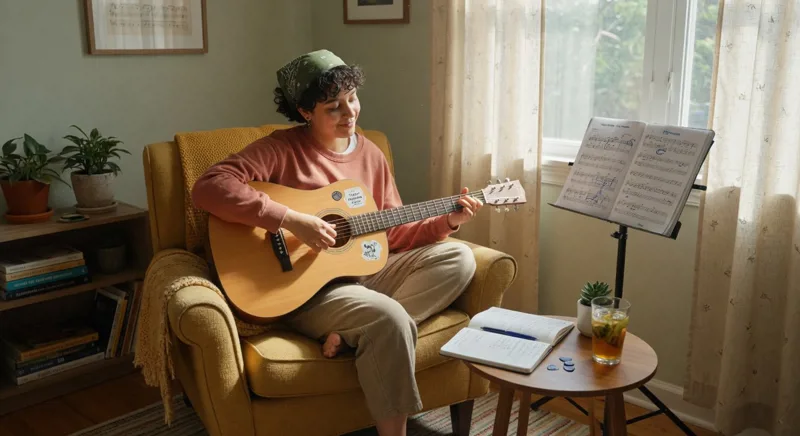
Your first music practice session does not need to end with a mastered song, a perfect scale, or a dramatic breakthrough. The first music practice session that does not require a big goal is simply a gentle beginning: pick up your instrument, listen closely, and spend a few focused minutes making music.
Why a Small Practice Session Can Be Powerful
Many beginners delay music practice because they imagine it must be long, difficult, or highly productive. That pressure can turn an enjoyable activity into another task to avoid. A smaller session removes the mental barrier and makes it easier to begin.
Effective practice is not just repetition. It involves attention, feedback, reflection, and manageable challenges. However, those skills develop gradually. Your first session can focus on becoming comfortable with the process rather than achieving a large musical goal.
Think of it as creating a positive practice habit. The immediate objective is not “become a better guitarist” or “learn piano quickly.” It is simply: show up, explore, and finish feeling encouraged.
What to Prepare Before You Start
Make the session easy to begin. Place your instrument where you can reach it, gather any sheet music or chord chart you need, and remove unnecessary distractions. You do not need an expensive practice space, specialized equipment, or a complicated music practice routine.
A chair, a comfortable posture, and a few minutes of uninterrupted time are enough. If you use a metronome, tuner, music stand, or practice journal, keep those tools nearby—but do not let setup become a reason to postpone playing.
A Gentle 15-Minute Music Practice Routine
This simple beginner practice routine works for piano, guitar, violin, voice, woodwind instruments, and many other forms of music study.
- Settle in for two minutes. Sit or stand comfortably. Notice your breathing, posture, and the way you hold the instrument. Relax your shoulders and hands.
- Explore the sound for three minutes. Play open strings, single notes, easy chords, or comfortable vocal sounds. Listen to tone, volume, resonance, and silence.
- Repeat one easy pattern for four minutes. Try a short scale, chord change, rhythm, bowing pattern, finger exercise, or simple melody. Keep the tempo slow enough to stay relaxed.
- Play something familiar for four minutes. Choose a song or musical phrase you already know. Do not worry about playing the entire piece. Repeat one enjoyable section.
- End with two minutes of free play. Improvise, hum, experiment with rhythm, or revisit the sound you liked most. Finish with curiosity rather than judgment.
Choose a Tiny Focus Instead of a Big Goal
A big goal can be inspiring, but it is often too broad for a first session. Replace it with a small question. For example:
- Can I produce a relaxed, even sound?
- Can I change between two chords without stopping?
- Can I play five notes with comfortable posture?
- Can I keep a steady beat for thirty seconds?
- Can I identify which part of this melody I enjoy most?
These are not performance goals. They are invitations to pay attention. A tiny focus gives your mind direction without creating pressure to prove anything.
Practice Slowly and Listen Carefully
Beginners often play too quickly because speed feels like progress. In reality, slow practice makes it easier to notice tension, uneven rhythm, missed notes, unclear articulation, and changes in tone.
Choose a pace that allows you to remain comfortable. If you make a mistake, pause, identify what happened, and try again more slowly. There is no need to repeat an error dozens of times. One thoughtful repetition can teach more than several rushed attempts.
For singers, this might mean using a comfortable range and listening for steady breath. For guitarists, it could mean practicing one chord transition. For pianists, it may involve playing a short phrase with relaxed fingers. For string players, tone and bow control may be the most useful focus.
What to Do When You Make Mistakes
Mistakes are information, not evidence that you lack musical ability. During your first music practice session, expect awkward notes, pauses, forgotten fingerings, and inconsistent rhythm.
When something goes wrong, use this three-step response:
- Stop without frustration. Let your hands and mind reset.
- Find the smallest difficult moment. It may be one note, one syllable, or one movement.
- Make the task easier. Slow down, shorten the phrase, simplify the rhythm, or remove one layer.
This approach builds self-awareness and keeps practice sustainable. It also prevents the common habit of simply playing a song from beginning to end while repeating the same difficult mistake.
How to Finish the Session Successfully
Success does not mean completing a lesson or playing without errors. A successful first session means you started, stayed present, and learned something about your instrument or your own attention.
Before putting the instrument away, write down one brief observation:
- “The slower tempo felt easier.”
- “My shoulders became tense during chord changes.”
- “I liked the lower notes.”
- “The rhythm improved when I counted aloud.”
This creates a useful practice log without turning music into paperwork. Next time, you can begin with the detail that caught your attention today.
The Real Goal Is to Return
The first music practice session that does not require a big goal teaches an important lesson: progress begins with participation. You do not need to feel highly motivated, practice for an hour, or understand every technique before starting.
Begin with fifteen relaxed minutes. Explore one sound, repeat one small pattern, and finish with something enjoyable. Over time, these modest sessions can grow into a consistent music practice habit—and the larger goals will become easier to choose, measure, and reach.